Ed Sheeran Returns to the Stage in Philadelphia: Fear, Anger and Hope Inside the Loop Tour
By SingArena Editorial · · Music News
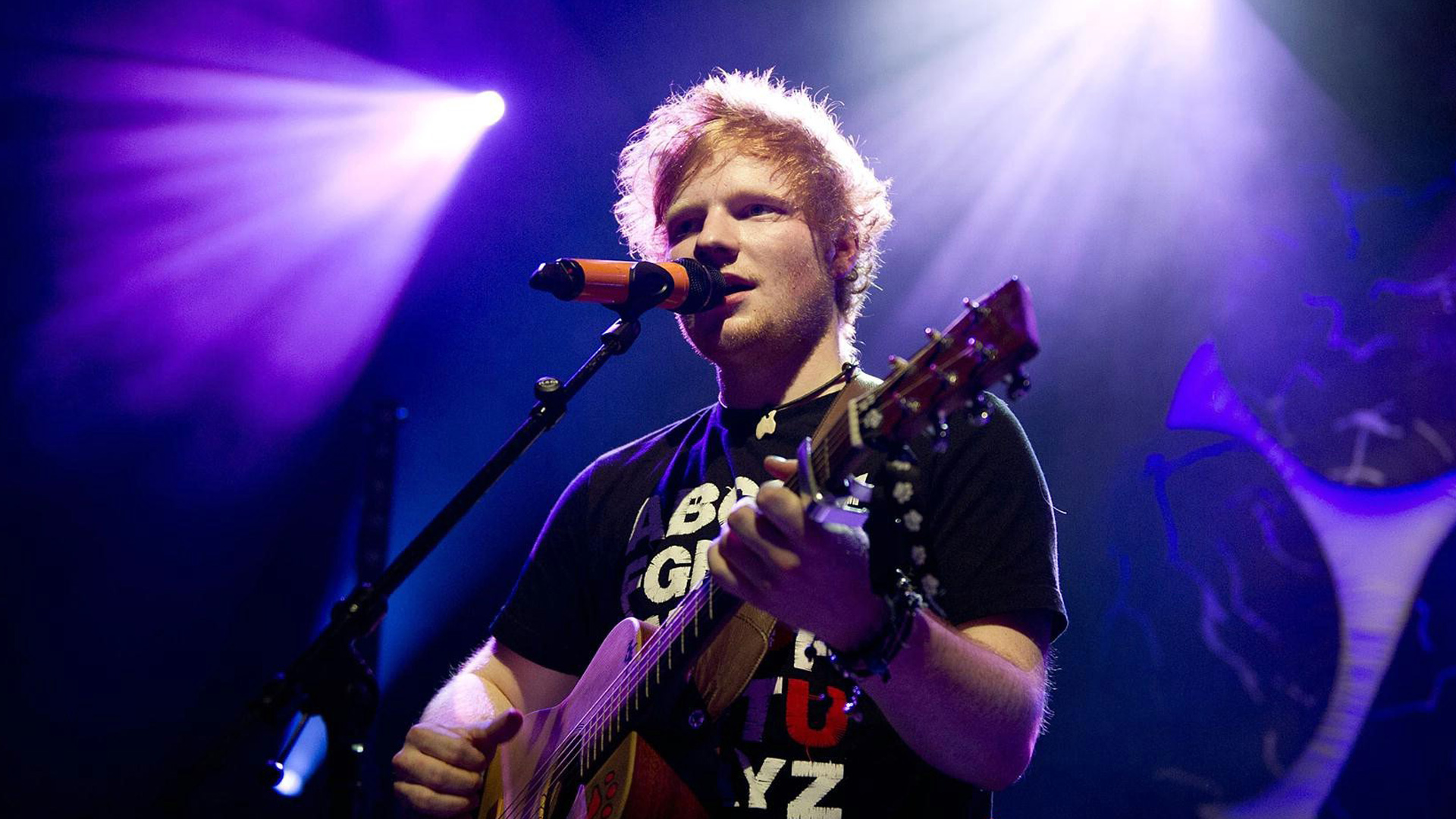
Source: fanart.tv (fanart.tv editorial)
After a week of fallout over Macklemore's removal from his Loop Tour, Ed Sheeran faced a divided Philadelphia crowd — and a stadium asking what he would say next.
Just after a quarter past eight on a Saturday night in Philadelphia, the Lincoln Financial Field was still waiting. The round, elevated stage stood ready under a bright pink LED screen reading "Loop Tour," a single mic stand at its center. Crew members made final adjustments. Fans scanned the stadium and asked the obvious question out loud: Where is he?
The answer, when it came, was not just a setlist. It was a statement. Ed Sheeran walked out and told the crowd he hoped it was okay to "say a few words about this last week" — reading from a teleprompter, nervous energy audible in his voice. Tens of thousands in the stadium, and countless more watching online, had been waiting for exactly that moment.
A Week That Changed the Tour
The Loop Tour had been rolling since earlier in the year, opening in Australia and building momentum as one of the year's biggest stadium runs. Then came the controversy. Tour opener Macklemore was removed from the rest of the tour after several venues — including the Robert Kraft-owned Gillette Stadium — allegedly told promoter Messina Touring Group they would not allow the rapper to perform, following his onstage statements at MetLife Stadium in support of Palestinians in Gaza and the West Bank, including a call for a "free Palestine."
Sheeran said at the time that he had tried to find a mutual resolution, but that the venue's and promoter's decision was final. The fallout was swift and heavy. By Tuesday afternoon, his remaining openers — Finneas, Lukas Graham and Aaron Rowe — had all dropped out of the tour, along with Beoga, who had played as a backing band for part of the set.
That left Philadelphia as the first real test: a sold-out-scale stadium show with no support acts, no clear script, and a global audience watching to see whether the tour would hold together.
A Stadium Divided
The atmosphere before the show reflected the pressure. Sections of midnight-green seats sat empty, and floor seats were still listed on Ticketmaster for as little as $90 shortly before showtime. Outside the sports complex, a small group of pro-Palestine protesters gathered near the NRG SEPTA station, waving large Palestinian flags and holding "Free Palestine" signs, criticizing U.S. involvement in the war.
Inside, fans were having their own quieter arguments. Dan Shapiro, a father of two, had bought tickets last September intending a family outing. After the Macklemore fallout, his household split. His 14-year-old, a devoted Sheeran fan, still wanted to see "Castle on the Hill" live. His 11-year-old daughter did not feel safe. "There's going to be protests, there's going to be disruptions and stuff like that," Shapiro said. "I don't entirely feel safe." In the end, he and his wife divided the trip: she stayed home with their daughter, he took his son to the Linc. He managed to get a refund on the two unused tickets through Ticketmaster, expecting pushback and finding none.
Another concertgoer, Bridget Goes, also secured a refund by phone — but chose to attend anyway, buying cheaper floor seats than the ones her boyfriend had gifted her last Christmas. "It made me feel better that at least less money was spent," she said. "But in the grand scheme of things, I'm not saving any lives." A Christian who counts herself a Macklemore fan, Goes said she wrestled with whether to put her money where her mouth was. Instead of boycotting, she decided to document the night for her TikTok followers. "I wanted to come to prove that all this outrage online is all talk," she said. "It's so wonderful that people care that much and that they are so passionate, but the concert still happened. There's still a ton of people here."
Why This Moment Lands So Hard for Sheeran
Context matters here. Sheeran is not an artist who built a career on political confrontation. Since his 2011 debut + and its breakout hit "The A Team," he has been one of the most commercially dominant singer-songwriters of his generation — the Official Charts Company's artist of the decade for the 2010s, the winner of a Song of the Year Grammy for "Thinking Out Loud," and the man behind the ÷ Tour, which became the highest-grossing concert tour of all time in August 2019.
His catalog is built on intimacy at enormous scale: "Shape of You" and "Castle on the Hill" arriving together as joint lead singles, "Perfect" topping charts in the U.S., Australia and the UK, and seven UK number-one singles spanning "I Don't Care," "Bad Habits," "Shivers," "Merry Christmas" and "Eyes Closed." Albums like No.6 Collaborations Project, =, −, Autumn Variations and 2025's Play kept him at the center of pop even as his sound shifted.
That is precisely what made Philadelphia so charged. A performer whose brand is universal likability suddenly found himself the focal point of a debate about war, speech, and the power of venues and billionaires to shape what happens on a stadium stage. The Loop Tour was designed as a communal, looping, one-man-band spectacle. Instead, its Philadelphia stop became a referendum.
What Happens Next
For the fans who came, the night still delivered what they paid for: the songs, the scale, the shared room. For the ones who stayed home, the questions linger. And for Sheeran, the Philadelphia show settled one thing and left another wide open. He showed up, he spoke, and he played — proving the Tour would continue. But the empty seats, the refunds, the dropped openers and the protesters outside tell a longer story about how much of a stadium can be filled by music alone.
Tags: Ed Sheeran, Loop Tour, Macklemore, Philadelphia, Live Music, Music News, GLOBAL